Process of food preparation in plants in easy way.
Introduction:
Basically, all the food process of plants is intangible we can see it happens, Many a times you have head about "photosynthesis" in the 10th or 9th it is a very easy process which carries out in day today. The process by which leaves of green plants prepare their own food is called photosynthesis.
- During photosynthesis, plants also contain the green pigment chlorophyll to produce food in the form of carbohydrates by using carbon dioxide, water, and light energy. These three things are very important for plants.
Importance of photosynthesis
Photosynthesis plays a vital role in our environment. The whole life form is directly or indirectly dependent on the process of photosynthesis carried out by plants. If photosynthesis does not occur in plants then plants cannot synthesize the food. This causes an imbalance in the environment. The plants will not produce oxygen and then no animal life will be able to survive due to the absence of oxygen. We will not get oxygen, food, and life on this planet will be extinct.
What Do Plants Need to Make Food?

- light ( natural sunlight, a light bulb)
- carbon dioxide (a gas found in the air; one of the gases people and animals breathe out when they exhale)
- water (which the plant collects through its roots)
- nutrients and minerals (which the plant collects from the soil through its roots)
Plants make food from the leaves. The leaves contain a pigment called chlorophyll, which colors the leaves green. Chlorophyll can make food the plant can use from carbon dioxide, water, nutrients, and energy from sunlight. This process is called photosynthesis.

During the process of photosynthesis, plants release oxygen into the air. People and animals need oxygen to breathe and we release carbon dioxide and which plants breathe. In the morning plants inhale carbon dioxide and leave oxygen but at the night they inhale oxygen and release carbon dioxide .

- Photosynthesis is the key process in the growth of plants.
- It is done with the help of carbon dioxide, water, and sunlight. The end products of photosynthesis are oxygen, which the plants release, and carbohydrates, which become the plants' source of energy.
Building on the basic structure of glucose, plants also use photosynthesis to create several more complex carbon-based chemicals essential to their growth and survival.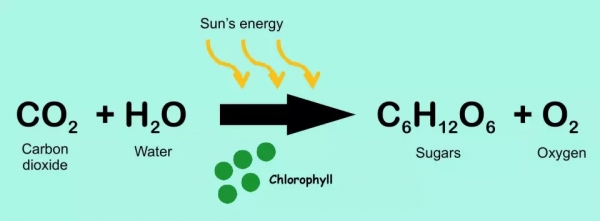
- The process starts with the water absorbed through the roots which rise to the leaves to enter cells called "CHLOROPLASTS".
- Chlorophyll absorbs light in the red and blue parts of the spectrum and uses it to power a crucial chemical reaction.
- Inside the chloroplast, absorb a single photon of light and in exchange for an electron. Then the remaining hydrogen is collected and synthesized to form carbohydrate molecules
- The process that creates the actual food for the plant does not require light, so it's called a dark reaction. In another part of the leaf called the Stroma, carbon dioxide that's been absorbed from the environment is reduced into carbon and oxygen.
- Even this time, the oxygen is allowed to escape only to allow hydrogen to combine with carbon to get the end product of the first process which is a simple sugar. They can be combined to produce any organic compound which the plant might need, it may be for the structure or nutrition.

Where does photosynthesis occur in plants?
The organelle of plant cells in which photosynthesis occurs in the chloroplast of plant cells. The photosynthetic pigment, chlorophyll is present in the chloroplast of the cell. It helps to absorb solar energy. It converts light energy into chemical energy and helps in the process of photosynthesis. The chloroplast organelle is present on the leaves of the plant.
All the parts of the plant are involved in this process. The root system and the shoot system both are involved. The shoot system of the plant includes the stem and leaves of the plant. As we all know that the photosynthesis process is carried out in the presence of sunlight. The pigment called chlorophyll has the ability to absorb sunlight’s energy. These are present in the chloroplast of the plant cell.


Comments
Post a Comment